Showing posts with label 52 in 52. Show all posts

Monday, 17 August 2015

Books: July 52 in 52

"Books. Cats. Life is good" - Edward Gorey

Decidedly late this month, because I am a bit rubbish at this blogging thing when I'm busy, and because frankly, it didn't occur to me to write this up before I went on holiday. This month, I discovered a couple of new authors, and read the worst book of the challenge so far. One month to go until I'm at the end of my 52 weeks and I've already hit 52 books... I suspect I'll squeeze a few more in before it's finished!

52. Elly Griffiths, The Zig-Zag Girl. 3/5
In post WW2 Brighton, Inspector Stephens is called on to investigate the death of a young woman, found murdered - cut in three as a reference to a magic trick. Stephens quickly realises that there are links with his former war Colorado's - magician Max Mephisto - and from there we enter a lighthearted romp as the two hunt the killer. Meanwhile, the reader is treated to a second mystery which runs through the novel as a second thread. Who were the MagicGang (the war time unit linking our male characters), and how does it link with events five years later? 
This is the first of Griffith's books that I've read, and despite an impressive back catalogue it does read a little like a debut, or an author who isn't entirely sure they're on to a winner. While the characters were interesting and the subplot intreaguing, it felt a little bit like the setting and war references were an afterthought and an attempt to recreate the atmosphere of an Agatha Christie. Enjoyable, but I wouldn't rush to read one of her novels again.

53. Armistead Maupin, Tales of the City. 2/5
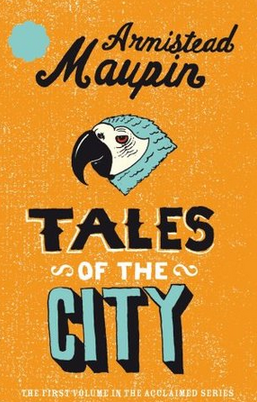
I read Tales Of The City after a recommendation from a colleague who assured me that I would find it hilarious. Honestly? It wasn't for me. 
It follows the experiences of country girl Mary Anne, who shocks her family when she moves to San Francisco. Set (and written) in the 1970s, it tells the tales of the people she meets, but the novel really revolves around her eccentric landlady Anna Madrigal. 
I suspect when Tales of the City was written it was somewhat shocking to middle America with plots revolving around characters being gay, cheating on their spouses, and facing affairs with people deemed below their social class. 
I just couldn't get in to it. I lost track of a lot of the characters (possibility because I was reading a chapter a day, but as it was written as a serial that shouldn't have affected it), and found most of them to be quite unpleasant stereotypes. Not my cup of tea. 

54. Jojo Moyes, The Girl You Left Behind. 3/5
After enjoying the first Jojo Moyes book I read, I thought I would go back to get after a couple of duds. The Girl You Left Behind is in many ways two novels in one. It starts in 1916, taking the reader to German Occupied France, and the difficulties of life under the regime for Sophie Lefevre, her family and neighbours.
The second part of the book is more contemporary. Liv, a young widow, is the owner of a painting - of Sophie - that her husband bought for her before his death. Unknown to her, the painting is being reclaimed as a "Spoil of War", and Liv suddenly finds herself embroiled in a legal battle, thrust into the media spotlight.
Aside from some occasionally irritating moments from our characters, I enjoyed The Girl You Left Behind. It somehow managed to be both a fluffy romance and a thought provoking discussion about ownership of art and the difficulties of establishing " rightful owners ". 

55. James Brindle, Modern Serpents Talk Things Through. 4/5
I'd not normally pick a fantasy - and I had not heard of this one - but it came up as a choice for Alex's Blogging Good read this month.
MSTTT introduces us to Tina, who is a modern dragon. She's not such a fan of setting things on fire or scaring people - and when human invades her home, she panics and locks it in a cupboard. Slowly, Tina gets to know her new human, and an unlikely love blossoms.
It's more of a novelette, a short story, but it is clever in the way that it subverts the reader's expectations. I suspect that everyone would identify with the themes - the need to be loved, accepted and the fear of judgement. If I was being cynical then I would say that at times it verges on contrived, but considering it's an early effort by an author I suspect we'll hear more of in the future, I enjoyed it. It also made me laugh, which is a rarity.

56. Lisa Bergren, Glamorous Illusions. 1/5
This book also made me laugh, but largely at it, rather than with it, and I'm not sure that was the author's aim.
When Cora learns that her father is a multimillionaire mining magnate and not the poor farmer she grew up with, she finds herself being blackmailed into going on a tour of Europe with her new half-siblings. Naturally they all hate her, she is an inverse snob, and she develops a thing for the tour guide. He is, of course, the only remotely bearable character.
To say that the book exacerbates every negative stereotype of Europeans would be an understatement. The English are snobby, the French sleazy - and they're all out to 'snare' a rich American. There's a ludicrous subplot involving a foiled kidnapping (I suspect that this attitude, combined with Taken, is why the Americans I knew at uni were terrified of travelling in Europe...) and - most frustrating of all - I ploughed through to the end in the hope that there'd be a satisfying cheesy ending. There wasn't. It stopped, mid story, to be completed in book two...
For so many reasons, avoid.

57. Neil Gaiman, Coraline. 3/5
I've been meaning to read a Neil Gaiman for ages so I was pleased when this came up as the other choice for A Blogging Good Read. It wouldn't have been my first choice of his to read - I tend to steer away from creepy - and this fits firmly in that category. 
Coraline moves into a new flat with her parents, and finds herself Very Bored. After wondering what is behind the locked door in the dining room, she manages to open it only to find a corridor to an alternative universe. Coraline has to solve the mystery of her Other Parents, to return home to safety. She's helped by the souls of three other children, a pebble, some marbles and the next door neighbour's cat.
Although it's not the kind of book I'd normally go for - both for the creepy nature, and because it fits into the Young Adult category (both areas I tend to avoid), I did enjoy it and it was an easy and entertaining read. I read an interview with Gaiman which described it as the kind of book that children would find an adventure but adults would read as a nightmare - and although it won't keep me up at night, I did find it clever. I also particularly liked how the cat was a goodie, and not a baddie, as they so often are...!

Sunday, 5 July 2015

Books: June Fifty Two in Fifty Two

"Have books happened to you? Unless your answer to that question is yes, I'm unsure how to talk to you" Haruki Murakami

48. Michael Robertson, The Baker Street Letters. 1/5.
I love a mystery and I love a Sherlock Holmes so it was inevitable that I would give this a go when I saw it in the library. I was sorely disappointed. 
Two brothers, both lawyers (cue stereotypes) rent 221B Baker Street, on the understanding that all letters addressed to the famous detective are saved. When one if the brothers opens a letter from a girl whose father has gone missing, a transatlantic adventure begins. 
I was so disappointed by this - as an initial concept it had so much potential but it quickly became clear that the author was using the Sherlock connection as a marketing opportunity rather than part of the plot. The lead characters were all very one dimensional and frankly unpleasant, and its pretty telling that a month after reading it, I can hardly remember a thing.

49. Jane Austen, Persuasion. 5/5.
After starting and stopping a couple of books, I decided to go back to an old favourite as a comfort read. Persuasion is probably my favourite of Austen's works, probably because it explores the characters and situation in so much more depth than some of her others - and because its hard not to feel her sadness and anger radiating off the pages. 
Anne Elliot, our heroine, a spinster at 27, was stopped from marrying Captain Wentworth by her father. Now that their house is bring rented out to his family, a reconnection is inevitable. 
The romance is really a side note in Persuasion, which is rather scathing in its critisicm of misplaced snobbery and the role of women in the upper middle classes. Accusations are frequently thrown that Austen only wrote about love and rich people but Persuasion dispels that myth. Numerous rereads later and I still love it.

50. Wilkie Collins, The Woman in White. 3/5.
After reading and enjoying a couple of 'classics' recently, I thought it was time to have a go at The Woman In White, which has been on my shelf but sadly neglected for at least ten years. I loved The Moonstone when I read it a few years ago but I was disappointed in The Woman In White. 
Walter Cartwright, a drawing tutor, is employed to teach two wealthy sisters - and on his way to Cumberland, makes the acquaintance of a woman on the run - dressed in white. Inevitably he falls in love with one of the sisters (not the dark haired sensible one. Oh no.)... And his banishment from the house is where the mystery begins. 
I don't know if its because I'm a bit immune to Victorian 'mystery' but I struggled with this in parts. It was long, overly so, and there were too many subplots to make the ending satisfying. The characters were, again, Victorian stereotypes, and I guessed the major twist about half way through. Not bad, but probably one of those classics where watching the BBC adaption will suffice. 

51. Helen Simonson, Major Pettigrew's Last Stand. 4/5.
I started reading this by accident after a case of mistaken identity, but found myself really enjoying it. It a gentle tale of a widower, the eponymous Pettigrew, and his everyday battles - with his obnoxious son, his angry sister in law, and his opinionated neighbours. Initially I wasn't convinced, I struggled to find anything likeable in the Major, but Simonson did a fantastic job of drawing his personality out as the tale went on, and he transformed from a snobbish and grumpy man into a principled and honest lead character. I found myself rooting for him as he befriended Mrs Ali, the widowed convenience store owner in his village, and as he supported her troubled family. 
A gentle but really lovely read, if a bit slow at times. It would lend itself to a cinematic portrayal well, and I wouldn't be surprised if it gets the Marigold Hotel treatment soon.

Tuesday, 2 June 2015

Books: May Fifty Two in Fifty Two

"After nourishment, shelter and companionship, stories are the thing we need most in the world" Philip Pullman
After a couple of months of struggling to concentrate on reading, I finally got my mojo back half way through May, and now have four books on the go that I've not quite finished yet. From one extreme to the other...

44. Joel Dicker, The Truth About The Harry Quebert Affair. 3/5
Harry Quebert, a famous and respected writer and university lecturer, is arrested rather suddenly for the murder of a teenage girl nearly thirty years before. His young friend and protoge, Marcus, decides to give up writing his Difficult Second Novel in order to dash to Harry's side and find out the truth about what happened to Nola Kerrigan. 
It took me a while to get into TTATHQA for a couple of reasons. Firstly - none of the characters are remotely pleasant. Secondly there's an element of the awkward about both the current day tale, and Harry's retelling of the 1970s in that it's difficult to work out what is true and what isn't, but it's quite slowly described and I struggled to really get absorbed in either narrative. However, despite that, I still enjoyed it. There was a slightly unpleasant sub plot involving a disabled character (hard to say more without giving a massive spoiler away) which I felt played too strongly to stereotypes, but the small town setting was atmospheric and it reminded me quite a bit of "True Detective". I wouldn't be surprised if it's adapted for screen soon.
 
45. Jules Verne, Around The World In 80 Days. 4/5.
A completely different kettle of fish - I listened to this as an audiobook, which was just perfect. I knew absolutely nothing about the book before I started it, and quickly found myself absorbed in the tale of Phileas Fogg and his manservant, Passepartout. It all starts when Fogg gets a bit drunk, and bets some of his friends that he can circumnavigate the world in 80 days. What, you've never done the same?
The best way to describe Around The World in 80 Days would be a stereotypical adventurous Victorian romp. It's dated, there are elements that would be deemed, er, racist nowadays (some eyebrow raising descriptions of Indian and Japanese cultures), and it's really rather daft... but it still works. The sub plot, involving a case of mistaken identity and Fogg being accidentally chased on his quest by a policeman, keeps the momentum going, and results in a rather marvellous ending.
Best read, or listened to, aloud.

46. Robert Louis Stevenson, The Strange Case of Dr Jekyll and Mr Hyde. 4/5.
Speaking of Victorian classics... I realised a while ago that I've lived in Edinburgh for seven years, and I've never read Jekyll and Hyde. I realised while reading it that it isn't actually set in Edinburgh after all.
Having no preconceived notions of what the novella actually involved, other than my wrong one about its setting, I enjoyed hearing the tale unfold. It is told from the perspective of two cousins (Utterson and Enfield) who become involved the eponymous characters after worrying that Mr Hyde is blackmailing Dr Jekyll. A year after their initial worries Utterson is presented with a letter, written by a man murdered by Hyde, and the plot thickens further...
I really enjoyed the dark and frankly unnerving tale of Jekyll and Hyde. While it could be seen to be a Victorian attempt to understand complicated mental health issues, there's something deliciously gothic about it. I'm not sure it really worked during bright and sunny evenings in May, but it's another one that would be wonderful read aloud in the depths of winter.

47. Barbara Taylor Bradford, Cavendon Hall. 1/5.
And a dud. A massive dud. A colleague recommended BTB to me ages ago after we had a chat about how much I'd enjoyed reading Ken Follet's sagas, so I was quite looking forward to delving into another historically set tome. Disappointed is an understatement. The entire plot revolves around Something Terrible happening to one of the Cavendon women, and the desperate attempts by her family, the Ingham's, and their servants, the Swanns, to Sort It All Out.
There are so many holes in the plot that the book is bizzarely reminiscent of the Important Lace Dress, which is described in more detail than a lot of the lead characters. There's some sort of strange pact by the Swanns to always protect the Inghams, which was both highly unlikely and completely unexplained. Why would servants be so keen to drop everything for over-priviledged and unpleasant rich folk? Why are they all in love with each other? Despite finding myself ploughing through in the hope that it'd all be revealed... it wasn't. At least it helped me get off to sleep. Avoid. 

Sunday, 3 May 2015

Books: April Fifty Two in Fifty Two

"There are two motives for reading a book; one, that you enjoy it; the other, that you can boast about it" - Bertrand Russell
I've really struggled to find books that I've been absorbed by recently. I've started half a dozen - but just couldn't concentrate on them. April shall therefore be known as The Month When I Watched All The Box Sets. 

40. Marian Keyes, Anybody Out There? 2/5
Oh, Marian. I thought I'd give Marian Keyes a second chance after really not enjoying her latest - I was so optimistic that this earlier one would be as good as Rachel's Holiday - it's got quite a few of the same characters, but no. It was dire. 
There's a bit of a formula to Keyes books. We start in the present with a bit of a "mystery". Why is Anna at home? What's wrong with her? We then do a flip back to "the start" and work out how she got to the present. Then we see the after effects... It's formulaic in structure, and unfortunately in plot line. 
I just wasn't bothered about Anna - compared to her sisters and their pretty rediculous plot lines, she's a really one dimensional character. The elements about grief and loss were well written, but it's a shame that Keyes ended up overshadowing it with a massive plot about psychics and mediums. Really not for me. I won't be going back to her others. 

41. Margery Allingham, The Crime At Black Dudley. 2/5
I'd heard such good things about Allingham's Campion mysteries - as one of the golden age of crime authors I was expecting to adore this as much as I love her contemporaries. Sadly not. When an odd bunch turns up for a house party, you know something is going to go wrong- when a tradition involving a dagger is reenacted, you almost want to shout at the characters. 
Campion, our hero and detective, is a decided oddball, but he's also very much a background character, bumbling around without our knowledge to find the villains. At the risk of giving the plot away - it's not your average murder mystery. There's a criminal gang, someone gets locked in a wardrobe, and a major plot line involves the syphoning of petrol... I suspect the main problem really is that it's very much of its time. I'll give another of her novels a go, but probably pick a later one, when Campion is more established. This felt slightly more like a farce. Not my bag.

42. Louise Candlish, The Sudden Departure of the Frasers. 4/5
It took me ages to decide whether I enjoyed this month's Curtis Brown Book Group choice. You know there are some books which make you feel uncomfortable and a little voyeuristic while reading them, but you can't quite put it down? It's one of those.
Christy and Joe Davenport manage to buy number 40 at a bargain price - the previous owners left in a hurry, and no one on the street will tell them why. There's whisperings behind curtains, and people actively cross the road to avoid them. Clearly something is going on. The book is really two stories weaved together - as Christy begins to delve deeper into the mystery, we get to know Amber, who sold number 40 in a flash, and the reasons why she bolted. She's the opposite of Christy - manipulative, popular and flash with her cash. You just know something is going to go wrong - and it does.
I found it particularly clever how I was drawn to both sides of the story equally. There's an element of the 'haunted house' about the novel - Christy's dreams come tumbling down, and there's an unwritten question of whether it's because of her own actions, or because of Amber. Or did they both become victims of the house itself? There are parts which are decidedly difficult to read, as you see how the tale unfolds it's a bit like reading a car crash - but I was absorbed. It's hard to review properly without giving a major part of the story away, but I really enjoyed how Candlish handled a difficult subject and showed two sides of a situation incredibly well. If you're a fan of the current "female protagonist thriller" genre which is popular at the moment, I'd highly recommend it.

Thursday, 2 April 2015

Books: March Fifty Two in Fifty Two

"The person, be it gentleman or lady, who has not pleasure in a good novel, must be intolerably stupid" Jane Austen

A varied selection this month, albeit quite a small one, including both the lowest and the joint highest rated books of my Fifty Two Books in Fifty Two Weeks challenge so far.

36. Jacqueline Winspear, Pardonable Lies. 3/5.
The third of Masie's forays into crime solving see her embracing an unusual task - proving that her client's son did actually die in the war. Undaunted, she delves in to the case, and the novel sees her exploring France, revisiting her own past and experiences along the way. 
I struggled a bit with this one, having enjoyed the first two. I found some of Masie's characterisation a bit laborious - and her reactions not quite in keeping with the fiesty and self aware woman introduced to us in the first two, although the reintroduction of an old friend provided a contrast from the doom and gloom of wartime memories. I also found the conclusion way too convenient, to the point of irritating. I'd guessed part of it (it was obvious from the start), but the remainder slotted into place too conveniently for me. Maybe I'm just getting cynical and dark in my tastes. 

37. Val McDiarmud, Northanger Abbey. 1/5.
I debated whether to go with the maxim of "if you don't have anything nice to say, don't say anything at all" but I'm worried that you'll be intreagued and decide to give this a go. For the love of all things literary - don't. It is a strong contender for the worst book I've ever read (slash listened to as an audiobook). We see our heroine, Catherine Moreland, transplanted into modern day Edinburgh during the festival. Gone are the balls and awkward social situations, in are ceilidhs and unpleasant bankers. 
The main issue I had with it, aside from the cringeworthy descriptions of the city I love (what's with the constant street and theatre name drops?) was the complete lack of awareness of the original Austen and why it is a masterpiece. Instead of a pastiche on the gothic and romantic tales of the late 18th century, McDiarmud has given us a teenage romance and references to Twilight. The subtleties around the pressure on young women to "marry well" to avoid destitution later in life are lost, replaced with gold diggers and snobs. 
My suspicion is that Northanger Abbey just doesn't translate into modern culture - that's probably why it's not been reinvented as Clueless (Emma) or Bridget Jones (Pride and Prejudice) - but I suspect part of it was the author selection. I ploughed on with it, expectinf it to take a dark and sinister turn, but was disappointed. Such a shame. A lesson in avoiding pastiches of a pastiche.

38. Holly Smale, Geek Girl. 4/5.
had absolutely no idea what Geek Girl was about until I downloaded it and started reading - it popped up as a suggestion on the local library's online books website as one that I might enjoy, so I thought I'd give it a go. I'm glad I did. 
Geek Girl introduces us to 15 year old Harriet, a self proclaimed geek. After being persuaded by a friend to go along to The Clothes Show Live (side note: yes they're still going, and yes teenage girls still go in the hope of being "spotted" a la Erin or someone else), Harriet ends up getting herself, somewhat awkwardly, signed to a modelling agency. 
As a quiet girl with very little confidence, badly bullied at school, Harriet sees this as Her Big Chance to start afresh and carve a new identity for herself, but in typical young adult novel style, it doesn't all go to plan.
Now, the likelihood of me picking this up and deciding to read it would normally be pretty slim. It doesn't tick any of the categories of any book I'd normally go for, but it's good to read out of your comfort zone every now and then. I enjoyed the escapism, the "moral story" was well handled, and it was great to have a teenage female lead who was funny, clever and incredibly likeable. It certainly made a change from the books I remember hating as a teenager. 

39. Iona Grey, Letters to the Lost. 5/5.
This month's choice for the Curtis Brown Book Group was a spot on choice for me after the first couple which weren't quite my cup of tea. 
In 2011, Jess is running from her abusive boyfriend. Desperate to find someone where to hide when she has nowhere to go, she breaks into an abandoned house and stumbles across a letter from an elderly man in America who has never forgotten the girl he fell in love with during the Second World War. And so our story begins - a complex but beautifully written double tale. On the one hand, we have Jess, struggling to rebuild her life, and on the other - Stella, a young woman in a semi-arranged marriage at the start of war. 
I'm not usually a fan of multi time frames narratives, but this works incredibly well. I think the key is that nothing is rushed. It's an incredibly long book - but in a good way. Our six main characters are slowly introduced and very well written - each has a realistic personality and their flaws are explained, so nothing seems particularly out of character. Grey tackles so many issues in a subtle way - poverty, homelessness, mental health and domestic abuse - but at no point does it feel like any of the issues are laboured, they're just part of the story.
It's really hard to review Letters To The Lost without giving too much away. We know from the start that Stella and Dan's relationship is doomed, but their story is still beautifully written, and it's an unusually uplifting book. Be warned - I'm hard hearted and cried twice (one in a brimming eyes way, once in an ugly way where I had to put it down to blow my nose), but I think that's testament to the story and how well written the characters are. 

Sunday, 1 March 2015

Books: February Fifty Two in Fifty Two


"It's not that I don't like people. It's just that when I'm in the company of others - even my nearest and dearest - there always comes a moment when I'd rather be reading a book" Maureen Corrigan

I've sort of lost the motivation for reading this month. I've started, and given up on, quite a few books, and mostly found myself listening to Desert Island Discs while walking to and from work, or cooking my dinner. Maybe it's a February thing, several folk have said they've struggled to concentrate recently - I've still not finished this month's Curtis Brown Book Group pick, which isn't like me at all. Anyway, a round up of February's reads:

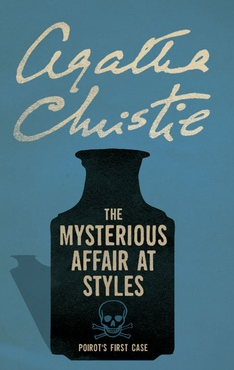
32. Agatha Christie, The Mysterious Affair at Styles. 4/5
Ah, Poirot. After feeling the need for a lot of comfort books last month, I turned again to a favourite author this month. Styles introduces us to Poirot and his sidekicks Japp and Hastings in rather spectacular style. Christie's debut novel, set in 1916, sees Captain Hastings on leave from the army and recuperating from a minor injury at Styles Court, a country estate owned by family friends. When the matriarch of the house is murdered and the family begins to fall apart, Poirot (who has recently moved to England as a Belgian refugee) is called in to solve the crime. It's a fairly easygoing romp, an excellent introduction to the well loved series with a rather good twist at the end. I was surprised that I'd somehow never read this classic. Thoroughly enjoyable. 

33. Marian Keyes, The Woman Who Stole My Life. 2/5.
When this came through the post as part of my Curtis Brown Book Group welcome pack, I was really looking forward to devouring it. Having enjoyed another of Keyes' novels recently, albeit one that is part of a series, I had really high hopes for this standalone novel which has had rave reviews. However... I was disappointed. It started off promisingly, with the introduction of our lead character, Stella, who develops the life changing Guillain-Barre syndrome and finds herself suddenly paralysed. As the weeks in hospital pass, Stella begins to form a friendship with her neurologist, Mannix Taylor. The book has a really odd structure - it's sort of three books in one - spoiler alert - the "present", the "past" and the "book in a book". While this helps the narrative move along, and creates a bit of mystery, I found myself guessing what was coming up due to clues earlier on, which spoilt it for me a bit. 
The other thing that really spoilt it was, if I'm honest - I couldn't stand any of the characters. Stella, the lead, was wishy washy. Her husband was an arrogant arse. Her kids were unbearable. Most frustratingly - Mannix Taylor should have been struck off the medical register at about fifteen points in the novel. I also got really, really frustrated with how unpleasantly Keyes describes the nurses - a little point, but it really jarred and was borderline offensive. I feel a bit like Keyes had tried to write a 'lighter' novel with this one, but for me it flew way past the mark. 

34. Sue Townsend, The Woman Who Went To Bed For A Year. 3/5. 
I'm not sure that reading this straight after another book entitled "The Woman Who..." but after starting this a couple of years ago and leaving it on a train several chapters in, I spotted it in a charity shop I thought I'd give it another go. It tells the tale of Eva, who goes to bed on the day that her twins go to university, and refuses to get out of it again. She's not mad - she's just exhausted. Her obnoxious family don't appreciate her, her husband has been having an affair, and she hates her job. As far as key themes go - it's certainly one which a lot of people will identify with. 
I'd been expecting this to be a funny and wry look at mental health and 'normality' so I was surprised when it began to get into a slightly surreal plot. I spent a lot of the book wondering where it was going to 'go'. I'm not sure that's a good thing. What could have been a really interesting exploration ended up being a little bit of a farce - the most interesting parts were the tiny subplots involving the conspiracy theorists who take up residence in her front garden, and her friendship with Alexander, a Rastafarian White Van Man who she hires to get rid of all of her furniture. Speaking of Alexander - the other thing I wasn't a fan of was that he was one of only two characters in the book who were bearable, the other being an elderly man who was horribly disfigured in a plane crash during World War Two.
It passed the time, but I wouldn't rush to recommend it to anyone. 

35. J K Rowling, The Casual Vacancy. 4/5.
Having spotted The Casual Vacancy on my Sunday night TV schedule, I thought it'd be a good idea to give it a read first - it has been on my 'list' for a long time. Inevitably publishing anything off the back of Harry Potter was going to be a struggle (hence, I presume, the Robert Galbraith scandal) and this book has ended up a little bit like literary marmite.
When Barry Fairbrother, member of the Pagford Parish Council, dies suddenly, a 'casual vacancy' is created on the council. It becomes apparent how much one man is held in high regard by his neighbours, and without his input, competition for power emerges. Existing councillors begin to question themselves and their allegiances, and prospective candidates begin plotting. 
At the heart of The Casual Vacancy are some really dark themes. Drug addiction, child abuse (physical and neglect), bullying, depression, alcoholism - all are portrayed so casually that I was almost impressed when I'd finished the book. It wasn't hard hitting as such, it was so well written that it took me a while to really realise how subtly the characterisation had occurred. The contrast between the 'rich' Pagford old town and the 'poor' Fields council estate was slightly overegged (although a family member who is a social worker in the West Country, where it's set, assures me it's pretty realistic), but the snobberies and casual racism thrown about by both sides was very realistic and well written. I really enjoyed the multi character nature too, particularly how well drawn the teenagers were. Arguably they were the most pleasant and enlightened folk in the whole town - unusual to read a novel where teens are portrayed in a positive light. Dark, brutal and thought-provoking - worth reading. 

Monday, 2 February 2015

Books: January Fifty Two in Fifty Two

"It is what you read when you don't have to that determines what you will be when you can't help it" Oscar Wilde

22. Anthony Trollope, The Warden. 3/5
I've been meaning to read more "classics" and not really done it, so when I spotted this and remembered enjoying a TV adaptation of another Trollope, I thought I would give it a go. 
It's the first in Trollope's Barsetshire chronicles, the tale of Mr Harding. Harding is the warden of a Hospital - alms houses for the poor - alongside his day job in the clergy. When a young doctor moves to the town and points out how disproportionately large Harding's stipend as a warden is, chaos ensues. 
It was clear that the novel is supposed to have a moral note, but I couldn't work out what it was. The church is criticised for profiting from the hospital, as is the press (for hounding Harding and making a scapegoat of him - apparently nothing changed in 150 years) but I couldn't really work out what the rest of the point was. Pretty much everyone is deemed to be at fault other than the corrupt Archdeacon, and men that were supposedly principled seemed to change their minds at the behest of a pretty girl. Dull and confusing.

23. Sophie Hannah, The Monogram Murders. 3/5
I was so excited about this one - I love a good Poirot, and have either read or watched pretty much all of the stories, so I was excited when this one finally became available at the library I devoured it quickly.
The first half of the book does follow closely in the style of a Christie with the sudden meeting of a girl in a cafe, and a locked room murder, and I was really quickly absorbed in the narration and adventure element. However - the second half really let it down for me, and I found it really quite hard to keep up with the red herrings. It got to the point where I was so confused with the plotline that I remembered I was reading a "new" Poirot - there wasn't enough character development to quite work out what was going on and there were a couple of small things (really hard to explain without giving the plot away!) that grated on me and I found myself thinking that the "real" Poirot would have got secrets out of people earlier. Maybe I'm just not a fan of pastiche after all.

24. Nicola Upson, An Expert in Murder. 2/5.
I was looking forward to this one - an accolade from P. D. James is a high recommendation indeed. Josephine Tey, writer and 1930s woman about town, is on a long distance train to London when she meets a young woman who is a fan of Tey's latest West End theatre smash hit. When the young lady is murdered on arrival at the station, Tey becomes entwined with the case, helping her policeman friend Archie solve the crime.
There's quite a bit of gadding about town, some unnecessary references to University boat races that are slightly out of place, and a lot of theatre luvvie chatter - but to be honest, not a lot else. Tey is a plot device rather than the main character and I didn't realise that she was loosely based on a real person until the end, which says a lot. There are too many subplots to keep track of what's going on, every time someone referred to another character as their "lover" I wanted to scream (I read a goodreads review where someone had started a tally, it was that frequent...) and to say that the whodunnit reveal made me raise a cynical eyebrow would be an understatement. I won't be reading the next in the series.

25. Jojo Moyes, Me Before You. 4/5
After becoming enraged by a Katie Fforde a couple of months ago, I asked the world of Twitter for suggestions. I wanted a non-crime book where the female lead wasn't entirely pathetic, didn't have a thing about an inappropriate bloke, and had a bit of gumption about her. This was suggested by a couple of people, and I'm so glad I read/listened to it. 
Lou Clarke is made redundant from her job in a cafe, and ends up taking a six month contract as a carer/companion to a quadriplegic young man to make ends meet. Initially Will, her employer, is difficult and unpleasant to be around, but as Lou learns more about his story, they become firm friends - until the inevitable plot device shatters Lou's perceptions. 
A decent female lead, a male character that isn't a misogynistic arse - what's not to like? Well... I'll be honest, I struggled a bit with the plot twist and Will's attitude. Assisted suicide is a difficult and emotional subject, and as I have had a colleague with similar disabilities, I found it particularly tricky not to want to scream at Will. Arguably this demonstrates a real talent for characterisation by Moyes. I wasn't a fan of her insistence on a class divide subplot (why did Lou's family have to be the stereotype of poor but loving, with Will's rich family portrayed as emotionally stunted?) but that was easily forgiven as all of the characters were believable and relatable regardless.

26. Alexander McCall Smith, Bertie's Guide To Life and Mothers. 4/5
I do love Alexander McCall Smith and his Edinburgh novels. He somehow manages to capture the characters of the city perfectly - the eccentric artists, the pushy mothers obsessed with gender neutrality, the rich and pleasant but slightly dim young men, and the all-seeing coffee shop owner - all are gentle parodies of personalities that anyone who knows Edinburgh will recognise.
I picked this up not realising it was the ninth in the series (I think I've read the first two or three, quite a few years ago) but still enjoyed dipping in to Scotland Street in the affluent New Town. I didn't feel like I was missing out on in-jokes, which is often the way with a series heavily based around characters rather than situations.
My only criticism though - I'm not sure how much someone that doesn't know the city would 'get' from these books. I suspect that the references to certain landmarks would be lost, and as Edinburgh heavily features as a silent key character, I think the subplots might lose a bit of their relevance or focus. Even so, an enjoyable and easygoing read.

27. M. C. Beaton, Death of a Dentist. 3/5
I know, I know, I said a couple of months ago that I wasn't going to carry on reading this series, but I ended up giving in and going for something cheesy to curl up with when the weather was particularly bad this month.
Hamish has a toothache - off to the dentist he goes, only to discover a murder scene. This kind of thing seems to happen to him with alarming frequency, considering how rural his beat is, but Macbeth is unperturbed and takes it upon himself to solve the crime. 
There's a little romance entwined in the tale (Hamish hasn't had the best of luck in the past), and the regular characters make appearances which is an improvement on the last couple I've read where the format has started to feel quite flat. A comforting and comfortable read.  

28. Katie Fforde, A French Affair. 3/5
Ok, so I slated the last Katie Fforde book I read - and then came back for another one. If I'm honest, I quite like rolling my eyes at her books (some people watch Made in Chelsea for the same reason, don't judge me...) and listening along while I'm walking to work. They're good for switching the mind off. 
This one was a definite improvement on the last - there was no stereotypical and unpleasant male lead (although there was an evil ex in the background), the main character was real quite likeable and the supporting cast didn't involve an older female relative. Easy reading (listening in my case) escapism. 

29. Antonia Honeywell, The Ship. 3/5
This was the first book sent to me by the Curtis Brown Book Group for review. If I'm honest, I wouldn't usually go for a Dystopian novel, and this had a tinge of the Young Adult about it - another label that would normally put me off. However - change from the norm is a good thing, and I really enjoyed reading out of my comfort zone. 
Honeywell is an alumni of the Curtis Brown Creative's novel writing course, with The Ship as her debut novel. It tells the story of Lalla, a sixteen year old living in the London of the future with her parents. They protect her from the brutality of the world, an Orwellian society where people who have lost their identity cards cease to 'exist', and tins of beans and sausages make a luxury birthday meal. Lalla's father has been harbouring a secret, a ship, which will provide them with a means of escape.
I found The Ship a fairly easy read, in terms of the alternative future and themes it presents it's straightforward. However - I think this was its downfall for me. I could see the plot unravelling before me (there were a couple of small 'mystery' elements which I guessed), and there wasn't quite enough depth or explanation for me to completely fall into the story like I'd hoped. I also found myself throwing my hands up at the ending... I suspect a sequel might be in the planning.  

30. Emma Healey, Elizabeth Is Missing. 5/5
It took me ages to decide whether or not I actually liked this book. You know when something is really uncomfortable, and sad, and it makes you a bit cross at the character even though the way they act isn't entirely their fault? There was a lot of that in Elizabeth is Missing. 
I listened to it as an audiobook which really helped me to become absorbed in the story - it's the biography of Maud, and her onset of dementia. As Maud's memory slowly declines, flickers of her past come through, and alongside her confusion about where her friend Elizabeth has gone, and why she isn't in her house anymore, the story of Maud's sister's disappearance in the 1940s emerges. 
Maud's decline and her relationships with her carers and family are incredibly well observed - the gentle reminders about forgotten words that rapidly become labels and in turn become frustrations and snapped harsh words will be familiar to anyone who has known a family member with dementia. I was also impressed with the way that Healey managed to negotiate really uncomfortable scenes in with ease - a particularly painful one towards the end when Maud doesn't realise that she has moved house brought me to tears, and the contrast between the kindness of some strangers towards her compared to others (I wanted to scream at an uncaring policeman) made me think about how difficult life must be with such an illness. 
The plots themselves intertwined well, and I really enjoyed the ending, despite having worked out the mystery of her sister's disappearance at the same time as Maud did, and having a good idea about what had happened to Elizabeth. 
I'll be urging my colleagues who work with older people to read this book - and everyone else I know. It was wonderful, if tough going in parts. 

31. Jaqueline Winspear, Birds of a Feather. 3/5
After finishing Elizabeth is Missing, I was after something a little more lightweight, and turned to the Masie Dobbs series. This is the second in the series (I read the first last year), which builds on the first well - characters are developed nicely, and we begin to see a bit more personality than in the scene setting first novel.
Maisie is called in to investigate the disappearance of a wealthy young woman, the daughter of a butcher-come-Oxford Street department store owner. Charlotte's vanishment is a big disappointment to her father, who is portrayed as a stereotypically gruff Yorkshireman (which annoyed me a little bit - are people from Yorkshire not allowed to be kind and caring in novels anymore?) - and Maisie's attempts to find her rapidly lead her on the trail of a series of murders.
The thing that bothered me about Birds of a Feather - and this is going to sound really picky - but I realised the significance of some of the clues (actually, the main ones) a good few chapters before our heroine did, which really annoyed me. I wasn't particularly bothered by the romance subplot either, it seemed a bit forced and unnecessary but I suspect it'll be explored more in the next in the series. 

Wednesday, 31 December 2014

Books: December Fifty Two in Fifty Two

"What she was finding also was how one book led to another, doors kept opening whenever she turned and the days weren't long enough for the reading she wanted to do" 
Alan Bennett
16. Ken Follett, Edge of Eternity. 3/5
I started this book in September. No, really. It's a stonking 864 pages, so it was always going to be a long haul but I was expecting to race through it. I'm a fan of Follet, I find his books are very readable, so I was really disappointed that Edge of Eternity, the third in a trilogy, didn't follow suit
Set mainly in the 1960s and 70s, it focuses on the social and political changes in the USA - the civil rights movement and the Kennedy legacy, with short dips in and out of Russia and Germany. I think this is the main reason I didn't enjoy it so much. Unlike the previous two in the trilogy, this book was less about the social changes and more about the politics, which made it harder to relate to and a bit more of a slog. Saying that - it brought me to angry tears at several points, and the weaving of real characters into the plot as fictional likenesses (e.g Alexander Solzenitsyn) was clever.
Enjoyable because it was part of the trilogy and I learnt a lot about 20th century history in a relaxed way - but not on the same level as the phenomenal first two. 

17. Jane Harris, Gillespie and I. 3/5
Another long one - about 20 hours as an audiobook. I'd heard great things about it but it didn't capture my attention until I was half way through. 
Our narrator, Harriet, befriends the Gillespie family quite suddenly and becomes a firm fixture in their lives. I could't quite work out how she could worm her way in so quickly, and I found her a bit of an unusual character. Desperately lonely, and living in a new city with no friends, it's not surprising that she clings on to every friendship possible, even when it's not completely sure if she's welcome. There was something unnerving about her though... 
It's hard to review this without giving away a massive spoiler - but - if you're a fan of a false narrator (think Gone Girl, only less irritating and more Victorian) and a gothic undertones it's worth a read. I'd suggest the book though rather than audio, as I suspect I missed quite a few "clues" by not completely concentrating.

18. Antony Horowitz, Moriarty. 4/5.
Ooh, how I love a Sherlock Holmes spin off. Although I didn't actually "love" the last Antony Horowitz one, if I'm honest. It just felt a bit... forced and overdramatic. I much preferred Moriarty, probably because neither Holmes or Watson feature in it.
In the aftermath of the Reichenbach Falls, we are introduced to Frederick Chase, an American private investigator who befriends Scotland Yard man Althelney Jones. Together, they begin an investigation into the seedy London underworld - which has rapidly begun to be infiltrated by New York gangsters after the demise of Moriarty. It's a cracking adventure, fast paced and fun with an element of the unusual - and with a cracking couple of plot twists. I really enjoyed it. 

19. Jessie Burton, The Miniaturist. 5/5.
I started reading this a few days before it was crowned "book of the year" after waiting for it a the library for several months. Ohh it was worth the wait. 
When Nella marries and moves to Amsterdam she is excited about her new life. Her husband presents her with a wedding gift of a miniature house, much to the disapproval of her new sister-in-law - a beautiful replica of her new home. As Nella begins to populate the miniature, dark and unnerving things start to happen, and secrets emerge. 
I loved this book. I couldn't wait for my lunch break to devour a bit more. It was creepy and dark without being overbearing, and the slow steady characterisation helped to unravel the story. I was so disappointed when it was over - the praise wasn't for nothing. 

20. Helen Fielding, Mad About The Boy. 3/5.
The third in the Bridget Jones series, it picks up over ten years after the second book left off. Having missed the newspaper column in the 2000s, I was a bit worried I wouldn't have a clue what was going on, but the column seemed to go completely unreferenced and the book plunged in to life for Bridget in 2014.
There were things I didn't like about it. Bridget has aged at the same rate as the books (rather than the films which came ten years later) so we meet her at age 51, with two young children in tow. I don't know why, but this just didn't work for me. It didn't seem quite right having her attend 60th birthday parties. There was no Shazzer. There was no Bridget's dad. Or Mark. 
But - it was a really warm tale about life after bereavement. It was funny and relatable (even if you're 20 years younger with no kids), and an enjoyable bedtime read. One of the best "female" books I've read in a while. 

21. Agatha Christie, The Secret Adversary. 2/5.
I had such high hopes - an Agatha Christie I've not read! Turns out there's a reason for that. The first Tommy and Tuppence adventure was less of a murder mystery and more of an attempt at an interwar spy novel, but without the charm of more famous tales from the period. Set after the First World War, it starts with Tommy and Tuppence bumping into each other, having first made friends in a military hospital. Unemployed and bored, they decide to get involved in "adventures and mysteries" - and are rapidly embroiled in complicated mysteries involving a ship, some Americans and a judge who may or may not be a wrong 'un. 
I listened to this as an audiobook and was really quickly bored by it, finding myself drifting out of concentration as it got more far fetched. It passed a day cleaning the house in anticipation of the holidays, but I won't be rushing to find any more of the series. Poirots and Marples for me!

Sunday, 30 November 2014

Books: November Fifty Two in Fifty Two

"Why can't people just sit and read books and be nice to each other?" 
David Baldacci, The Camel Club.

A slightly paltry selection this month, somewhat hampered by my having started reading a 850+ page tome (can I count that as 3 books?), and a 19+ hour audiobook after finishing these four. Unsurprisingly, I've not finished them yet. Roll on December, month of candles, blankets, port, cheese - and more books.

12. Graham Greene, Our Man in Havana. 4/5 
Graham Greene has popped up a few times as a suggestion in my Goodreads list, as I have quite a few classics on there. I wasn't completely sure what to expect, having (if I'm completely honest) not really heard much about his books before, but I really enjoyed it. The tale of how an English vacuum cleaner salesman living in Cuba accidentally becomes a spy somehow managed to be funny, despite a definite dark undertone. Even though it's a fairly short character based tale, the atmosphere of 1950s Cuba, pre-missile crisis, is very evocative and although being deliberately farcical, Greene's own experiences of working for MI5 make it strangely believable. I really enjoyed it, although I did crave daiquiris for several days afterwards. 

13. M. C. Beaton, Death of a Nag. 2/5
Aside from Our Man in Havana, most of the books this month have been decidedly un-taxing and comforting. However, after a couple of duds in a row, I think it might be time to extract myself form the Hamish Macbeth series, and move onto something else as my fluffy bedtime reading. Our lead character was still pining over a broken heart - and tragedy comes in threes, as another loss knocks him for six, and someone staying in his holiday B&B is murdered. 
As with some of the others I've read where the setting is Macbeth's hometown, the characters just felt flat and one dimensional. I was surprised at the murderer, but to be honest I wasn't overly bothered, having got bored of the unpleasant stereotypes about handsome men and spinster women along the way. Disappointing. 

14. Carola Dunn, Fall of a Philanderer. 4/5.
Ah, this is more like it. I do like the Daisy Dalrymple series - it's as cheesy and fluffy as Hamish Macbeth, but with a cracking female lead (think a young Miss Marple) and a brilliant supporting cast. The characters have grown with the series, so reading them in order has been a good choice, but they'd be fun as standalones as well.
This one - set while Daisy is on holiday - was an entertaining romp, with characters that veered on the right side of believable for a very camp novel. The prejudices and realities of life in 1920s Britain were nicely explored - the poverty of farming families, the emotional impact that war had - without being forced. It's also one of very few "crime" novels I've read where I didn't guess the twist, which is always quite satisfying.

15. Hester Browne, The Vintage Girl. 3/5.
I started off quite liking this one. Evie is a massive antiques geek - obsessed with buying "treasures" that noone else wants. She has a bit of a thing about country houses, and so she is in her element when she finds herself invited to value the contents of a castle in the Scottish Borders. So far, so predictable, I thought. Except - unlike the Katie Fforde I hated last month, it wasn't. There wasn't a massive neon plot device sign, things were a bit more complicated than that, which is always a good thing. 
However... It still irritated me. Clearly written for the American market, the details of Scottish dancing and stereotypes that accompanied it were excruciating. The leading lady began to grate after a while, and the ending all felt rather rushed and sudden. Not bad for a bedtime read when you can't concentrate on anything else - but not exactly good either.

Saturday, 1 November 2014

Books: October Fifty Two in Fifty Two

"Never trust anyone who has not brought a book with them" 
Lemony Snicket, Horseradish

Two months in, and I'm really enjoying the 52 books challenge. It's definitely encouraging me to find an hour or two each day (usually running away from the office at lunch time towards a local coffee shop) to just sit down, read and relax.

5. Karen Joy Fowler, We Are All Completely Beside Ourselves. 3/5.
This was my selection for Alex's Blogging Good Read series. I'd heard really good things about it (it was shortlisted for the Man Booker Prize) but couldn't get my head around how it could be that good when my other Karen Joy Fowler experience was The Jane Austen Book Club.
If I'm honest - I'm still not completely sure about it. It didn't grip me in the way I had hoped, and I found the lead character quite irritating. The time-hopping narrative style didn't really draw me in, even though it was actually quite a clever way of telling the story, and unusually done - the story was told more in themes than a linear way. 
Because I knew next to nothing about the book, I didn't "see" the twist coming (I won't reveal it just in case you're also completely in the dark) and was genuinely shocked by it, but after it was out in the open it felt more like a campaign manifesto in parts than a novel about a dysfunctional family. There were really quite traumatic details that I wasn't expecting - animal based, nothing in a Dave Peltzer zone - and that instantly turned me off. Maybe I'm just too much of a softie to read a painful book. Saying that though I did think it was well researched and written (I loved how the philosophy was weaved in) and a great read for anyone interested in family dynamics - just not my cup of tea.

6. Katie Coyle, Vivian Versus The Apocalypse. 4/5
Another of the Blogging Good Read choices - I'd not heard of this one and it really wasn't the type of book I'd normally pick (I usually stay away from anything remotely sci-fi, and tend to steer in the opposite direction to teen fiction). I will quite happily say thought that my initial prejudices were wrong, and I really enjoyed it. I found the characters surprisingly realistic the more we got to know them, their reactions to difficult situations (booze, normally) and the bickering was all reminiscent of actually being eighteen. Coyle managed to toe the line between irritating characters, and realistic flaws pretty well. 

The story itself - about a new religion which appears to correctly identify the date of the apocalypse - I thought was really well executed. For a tale which span almost a year it was fast paced, and I enjoyed getting to know more about what may have actually happened as the characters did. I find that sometimes in "unusual situation" books the characters keep things from the audience, or the narrator lets the secret slip but because so much of this book is based on conversation, it unravelled quite naturally. 
My only criticism is that the ending - which was nicely handled, I wasn't sure where it was going to go - was a bit fast for my likes. I might have to re-read the last couple of chapters in a week or two if I've not remembered it all. 


7. Agatha Christie, 4.50 From Paddington. 3/5.
The third - and final - Blogging Good Read choice. I'd not read this one before, despite being quite a big Agatha Christie fan. I listened to it on audiobook, read by Joan Hickson, who was perfect. She just is Miss Marple. However - Miss Marple isn't really in this one much, and I think that's why I didn't enjoy it as much as others. The charm and powers of her reasoning (Miss Marple is a wonder for matching murderous situations to small time scandal in her home town) were lost, and that's what makes Agatha Christie's stories so enjoyable normally.
Even though it wasn't quite as riveting as I'd hoped, I still enjoyed the story and the mysterious romp, and I found it strangely comforting.


8. Katie Fforde, The Perfect Match. 2/5.
I picked this one up from the library as an audiobook. To say that it isn't my usual choice would be an understatement. Bella is going out with an estate agent, which we all know is synonymous with being an arse. Except she is one too - the rare type that actually cares about her clients and wants to help her 80 year old friend stay in her mansion. She's just too nice, frankly. She's got a thing about a former colleague, a lawyer, which we also know is synonymous with being an arse, and therefore chaos in her love-life should ensue. Except it doesn't and we know how it ends from the beginning because there are massive plot hinting klaxons. I found myself more interested in the sub plot involving her godmother (because living with a godmother is more socially acceptable than your actual mother), and a stranger on a train. That one should have ended in some sort of 1940s mystery. Except it didn't. We know how that one ends from the beginning too. Unoriginal, uninspiring, but surprisingly good to have on in the background while you're deep cleaning the kitchen.

9. M. C. Beaton, Death of A Charming Man. 2/5.
I do normally really enjoy my silly murder mysteries, and have been working my way through this series, but this one (number 10) didn't quite do it for me. It's premise - a handsome man turns up and everyone goes gaga for him - is quite similar to one of the others in the series but somehow missing the usual charm. Hamish, our protagonist, is miserable, his love interest is being unpleasant, the additional characters (none of the local neighbours in this one) were all unlikeable and it was all just a bit... much. I just wanted it to be over so I could move on to the next one in the hope that's back to the usual funny and relaxing cheese. Fingers crossed.

10. Edward Marston, The Painted Lady. 3/5.
Another audio book. I picked this one because it was a historical mystery (there's been a theme in the type of book I choose at the moment) and to begin with, I wasn't sure whether I could keep track of the characters. But I carried on, and enjoyed it. The parallels between 18th Century London's prejudices and modern day Daily Mail scandals amused me - he must have been the murderer, he was a Foreigner And A Catholic! Not particularly taxing, not an especially historically accurate read, but quite entertaining.

11. Marian Keyes, Rachel Goes On Holiday. 4/5. 
I really wasn't expecting to enjoy this as much as I did. It was another fluffy audiobook to have on in the background. Fluff is doing Marian Keyes a miss-service. Yes, there is a romance tangled up in the story - but there's also tales of drug addiction, alcohol abuse, chronic loneliness, and how close people get to really, really messing up. The story of Rachel, and her rapidly declining mental health, is told slowly. It's a weighty tome. But I think that's why it works. Keyes has been open about her own drug and alcohol addictions in the past, and I did find myself wondering whether there were autobiographical elements here.
There are parts of this which are surprisingly bleak for a "chic lit". Rachel's spell in rehab, the main part of the story, manages to discuss addiction with a sympathetic but brutal reality and I found myself really warming to the characters, all of whom had their own stories which unravelled alongside Rachel's.
Not at all what I thought it would be - I really enjoyed it.